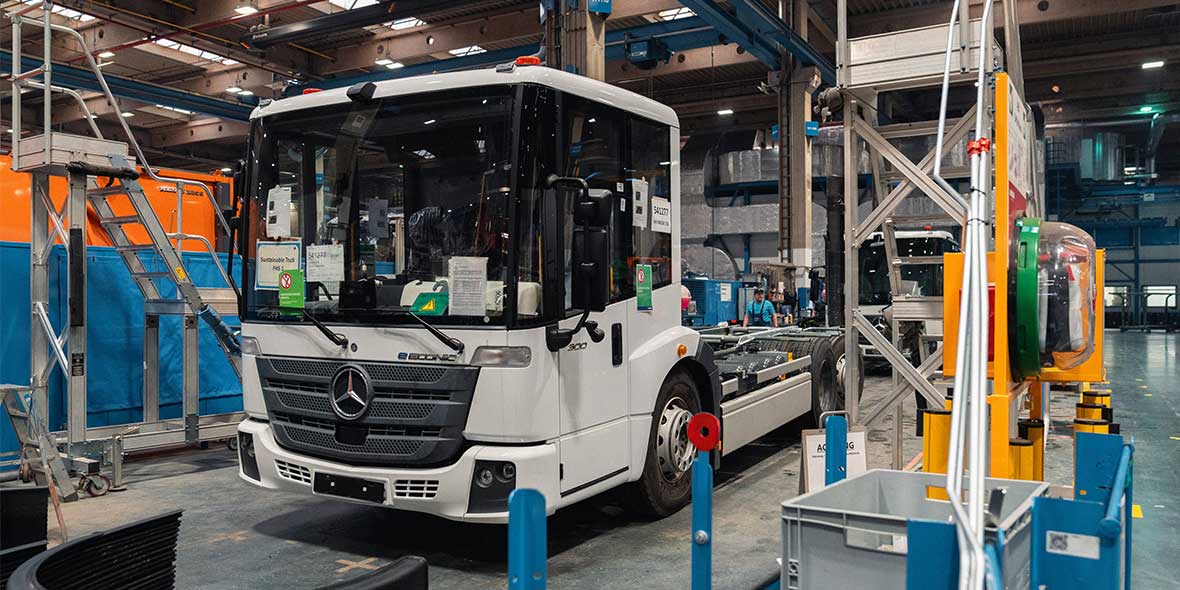
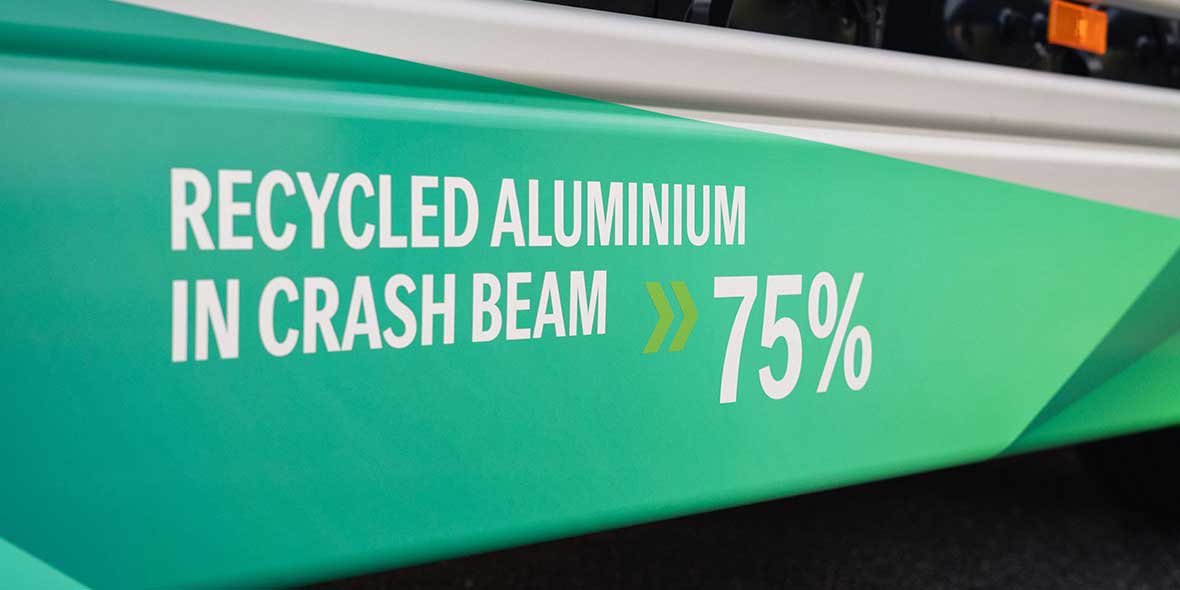
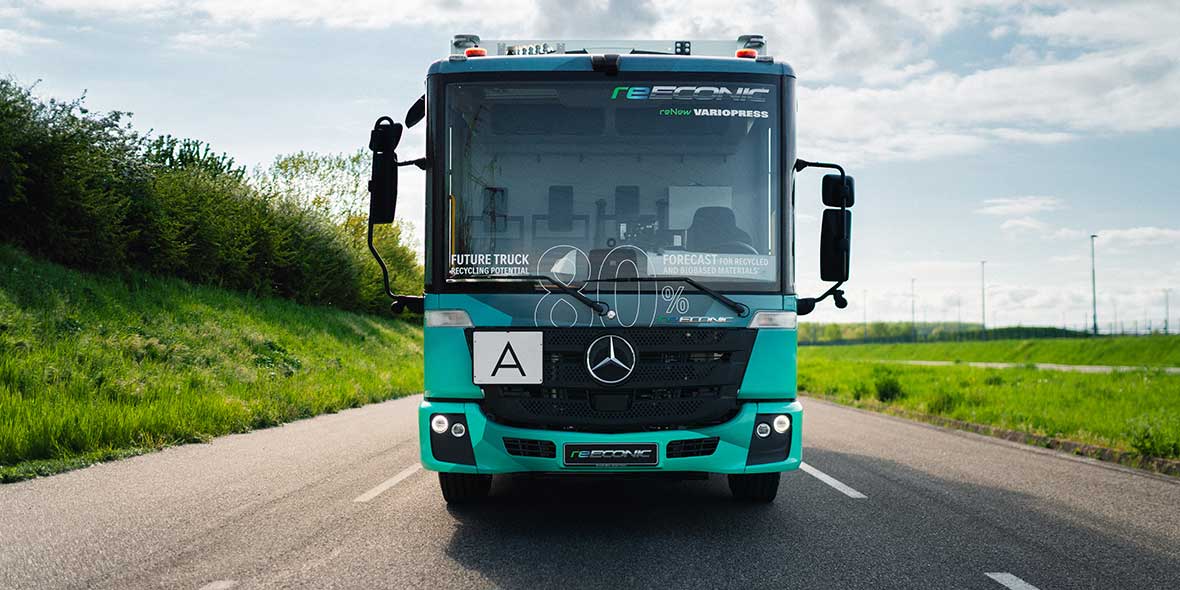
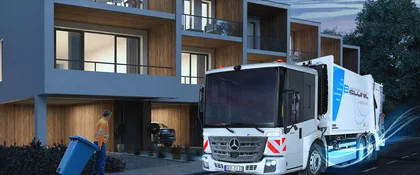
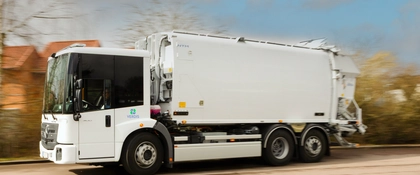
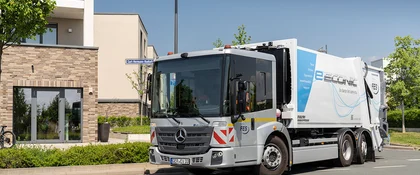
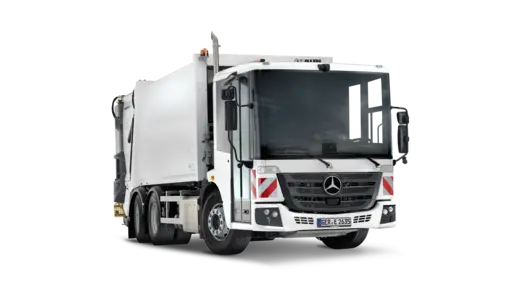
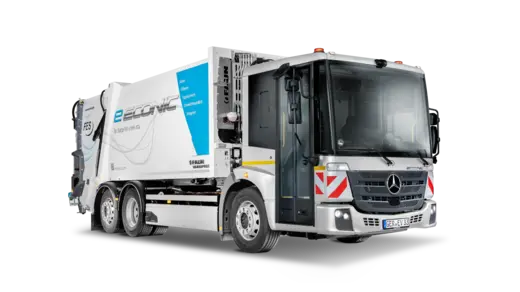
This could theoretically save up to 41% CO₂ equivalents in production. TÜV SÜD has checked and confirmed these values and the methodology.
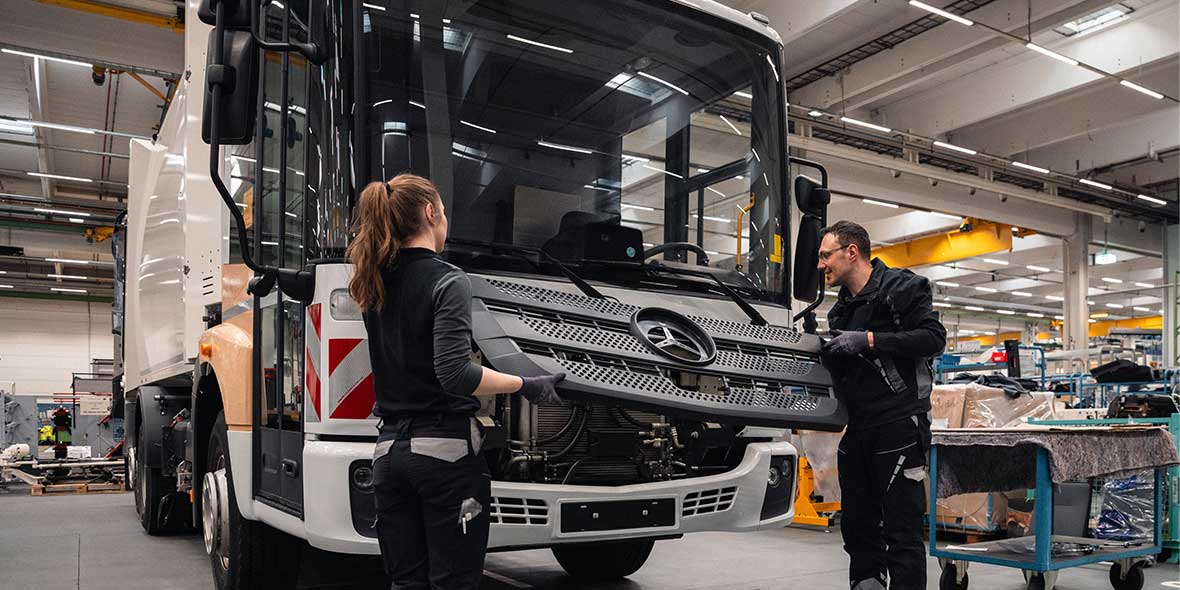
“With our European partners, we have been able to play a pioneering role when it comes to recycling materials and the use of natural materials”, says Roland Dold, reECONIC project manager, Mercedes-Benz Trucks. “Many components can also be reused in their raw material form after their useful life – that’s the circular economy in its purest form.”
The body makes it complete.
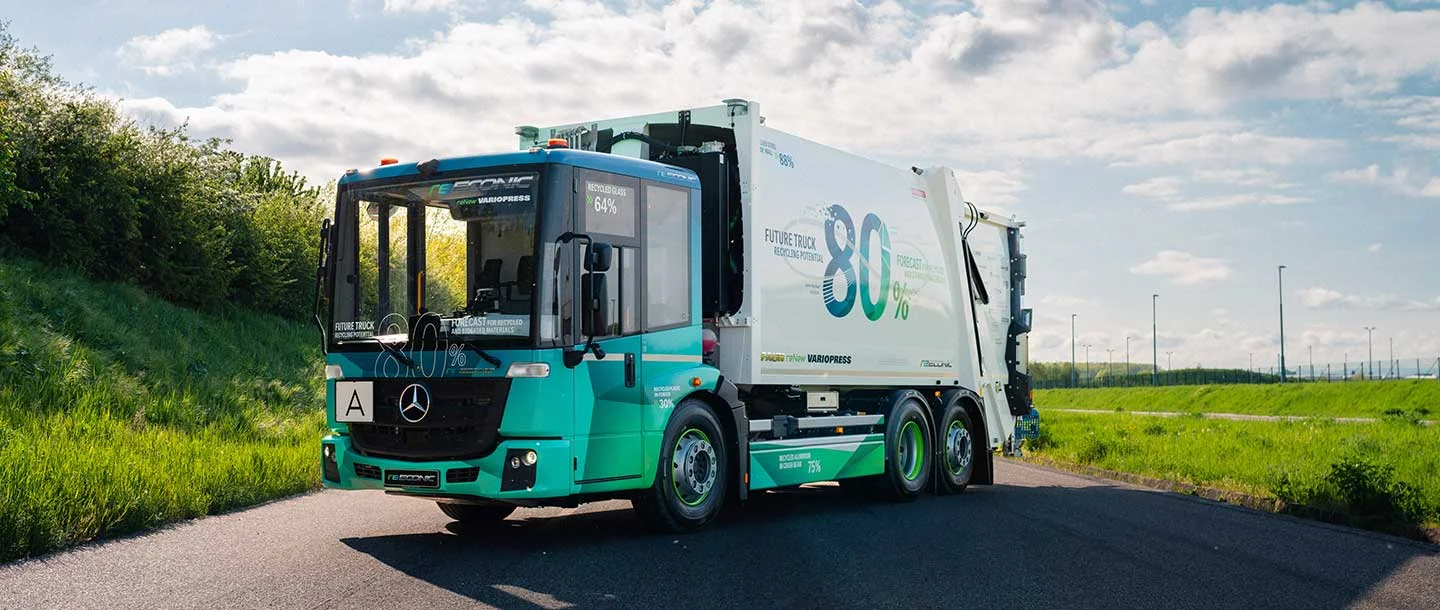
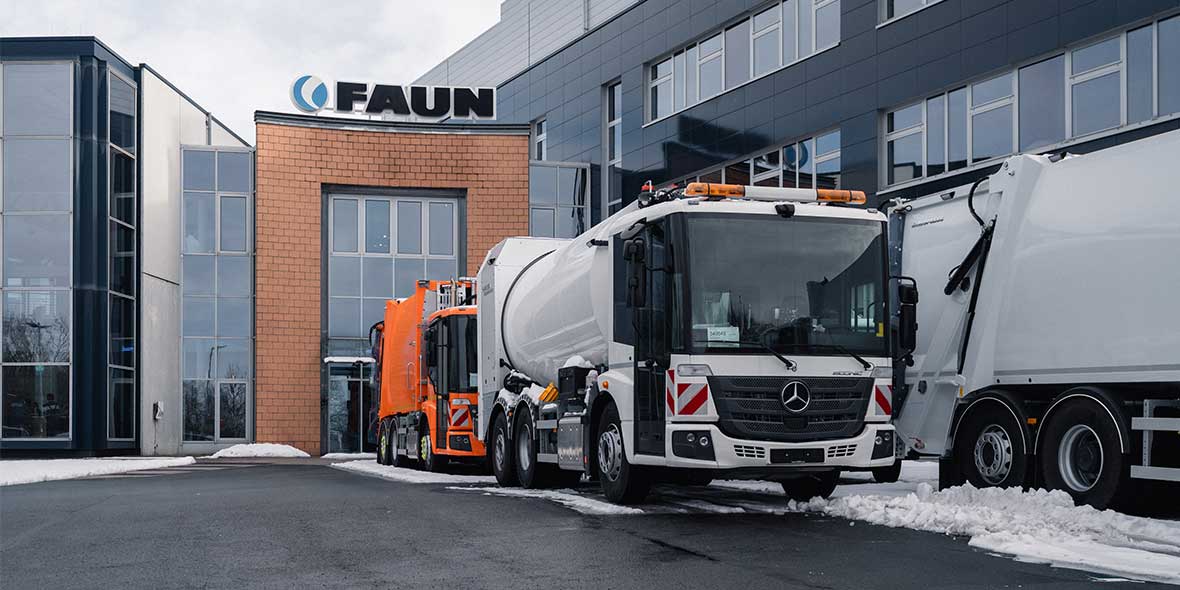
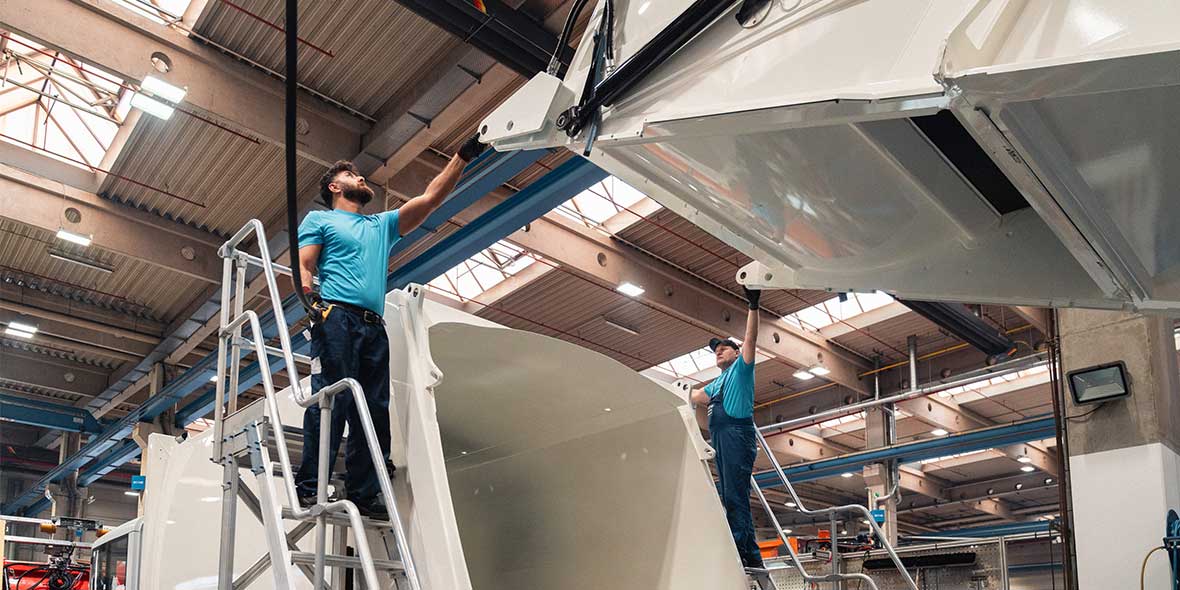
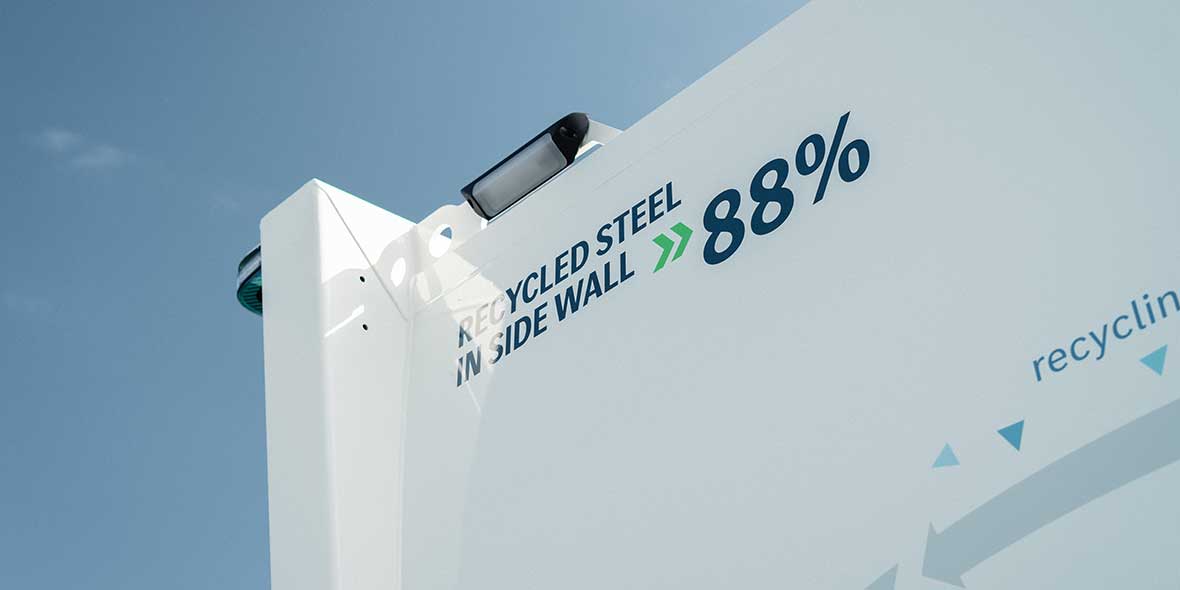
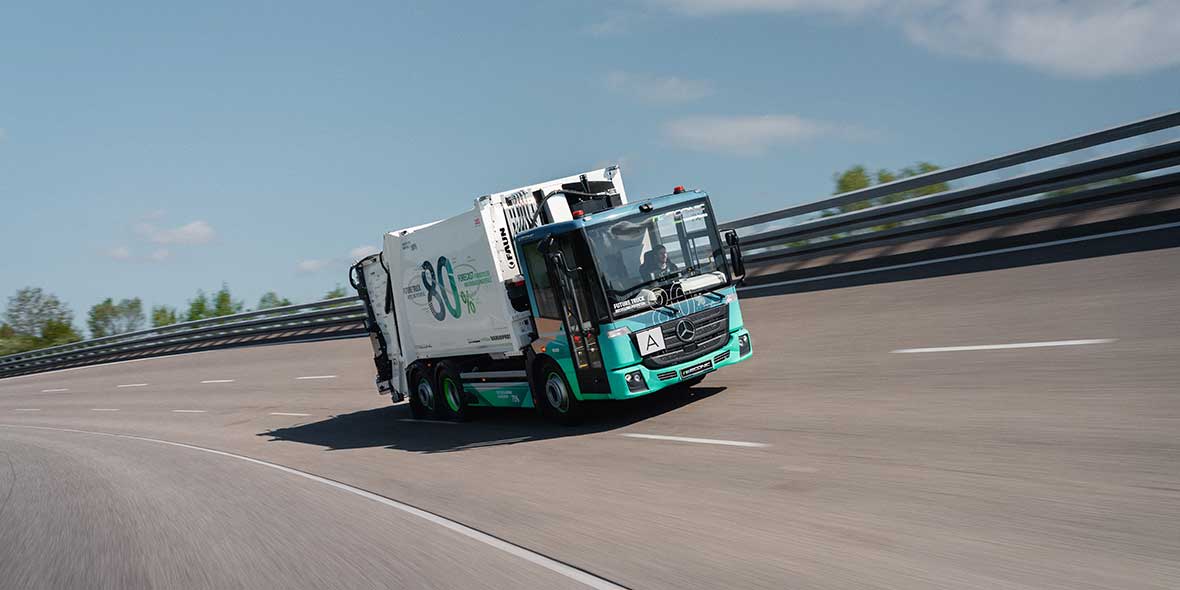
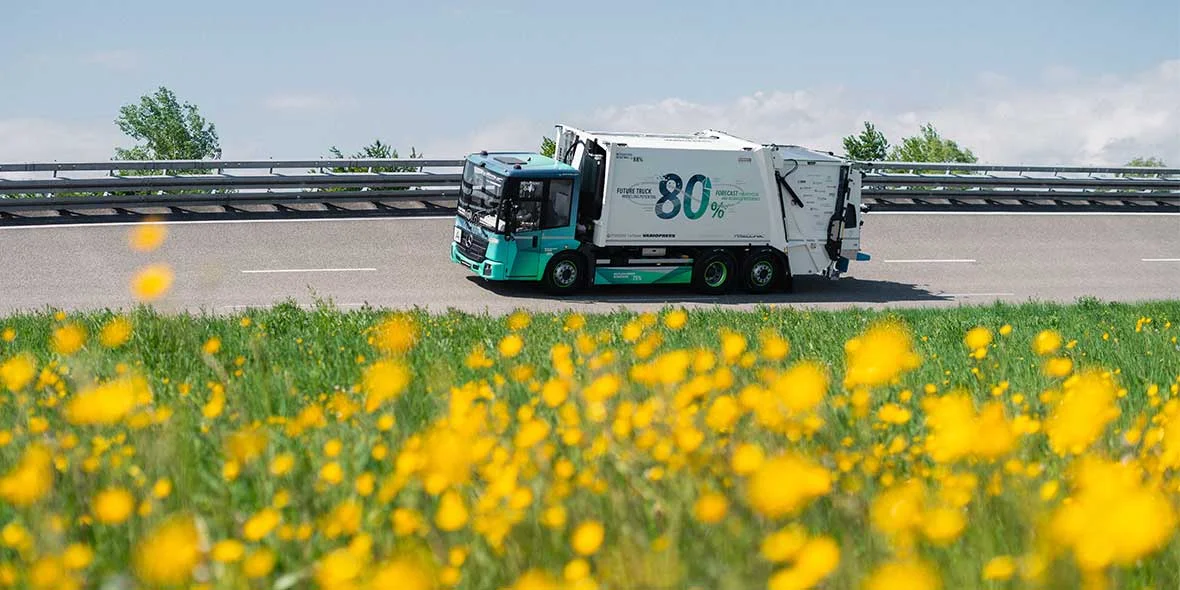
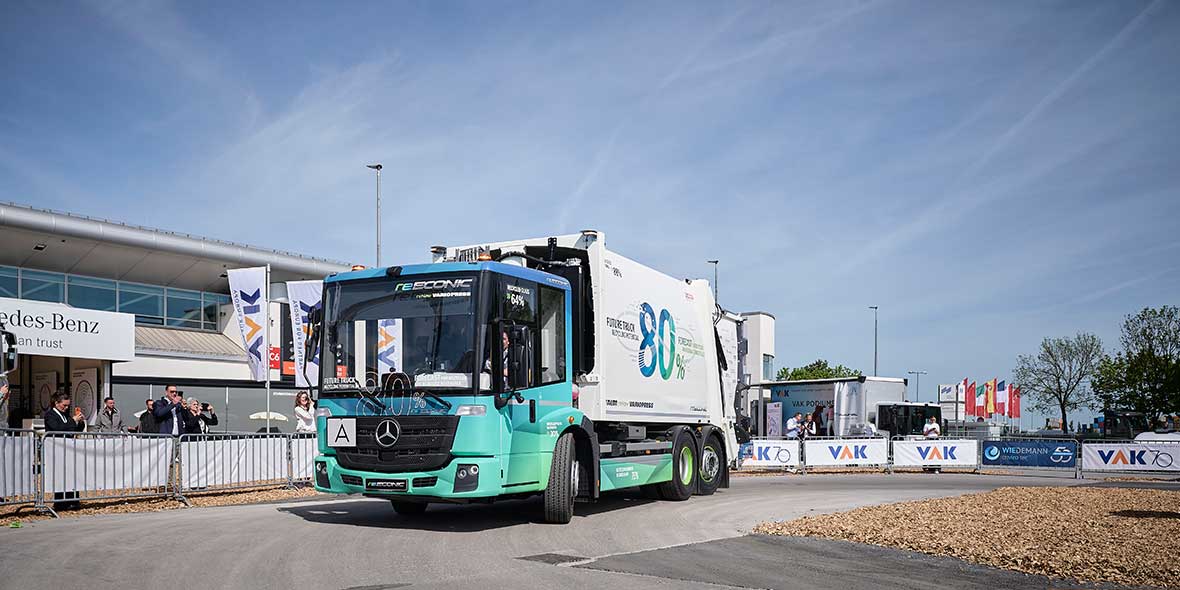
The vehicle includes the FAUN reNew VARIOPRESS body. Here, too, there is a consistent circular approach: up to 88% of the body weight can theoretically consist of recycled materials. The wings are made of 92% recycled plastic. The control element carrier has a recycled content of 99%.
“Sustainability is not a trend: it's a matter of crucial importance", says Malte Sonnenburg, CEO, FAUN Group. “With the FAUN reNew VARIOPRESS, we have proven that responsibility and cost effectiveness go hand in hand – and that it really is possible to create a circular economy in the vehicle production industry.”
Back into the cycle.
A vehicle made from recycled materials should also be able to be recycled itself at the end of its life. This was a key concern for the project partners. For this reason, special emphasis was placed on high potential return rates for the reECONIC.
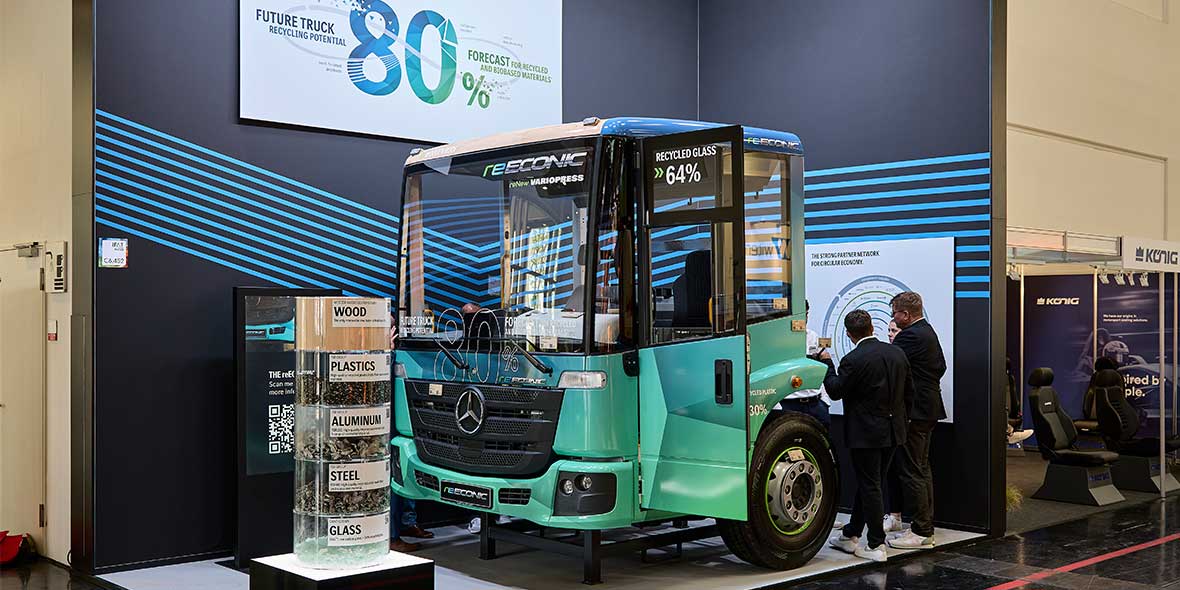
Glass can be returned to the material cycle indefinitely - without loss of quality. A total of 64% of the glass surfaces used in the reECONIC are already made of recycled material. Beech wood, a renewable raw material used for the first time in a modern commercial vehicle from Mercedes-Benz Special Trucks, also has plus points of its own, as beech trees absorb CO₂e from the atmosphere.