All good things come in threes.
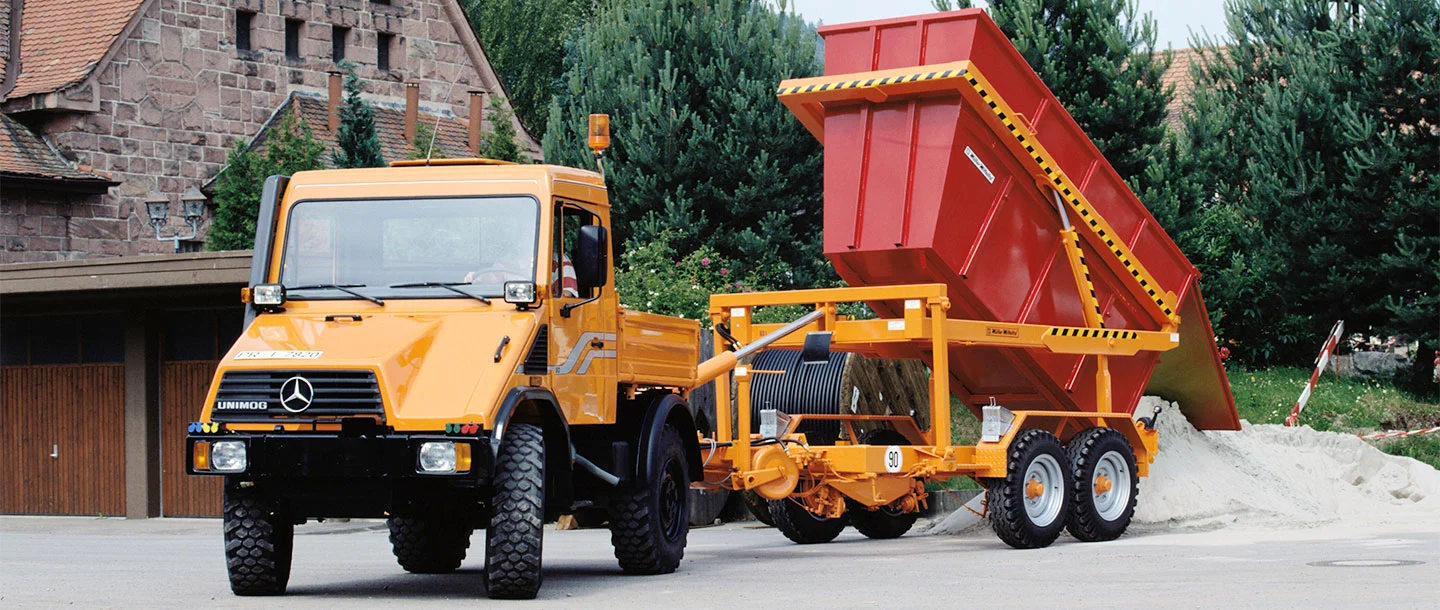
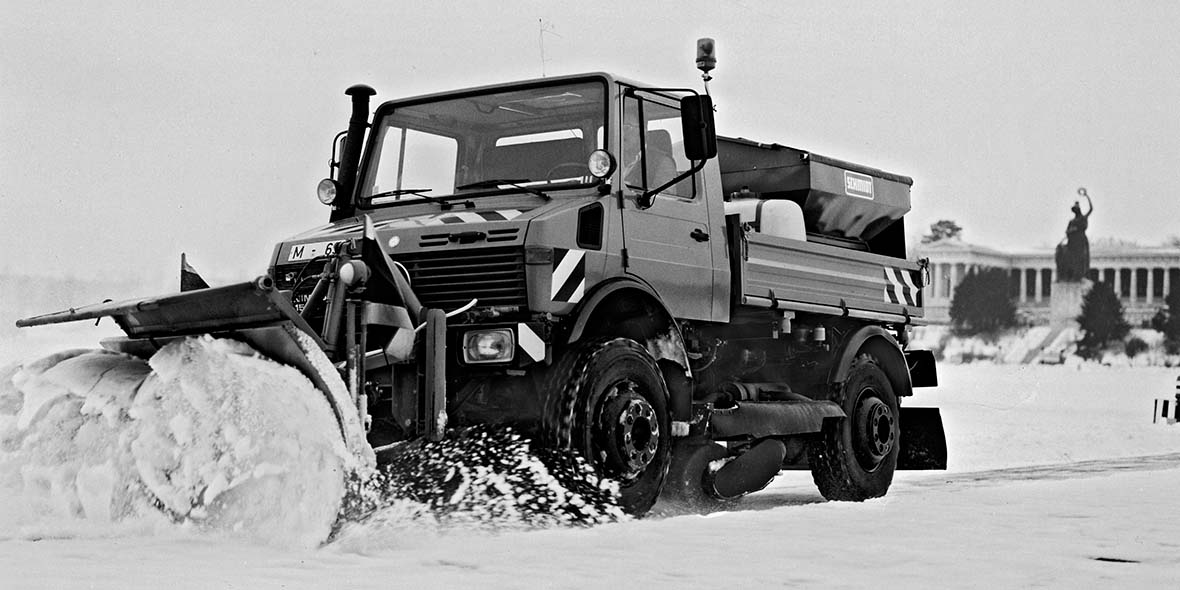
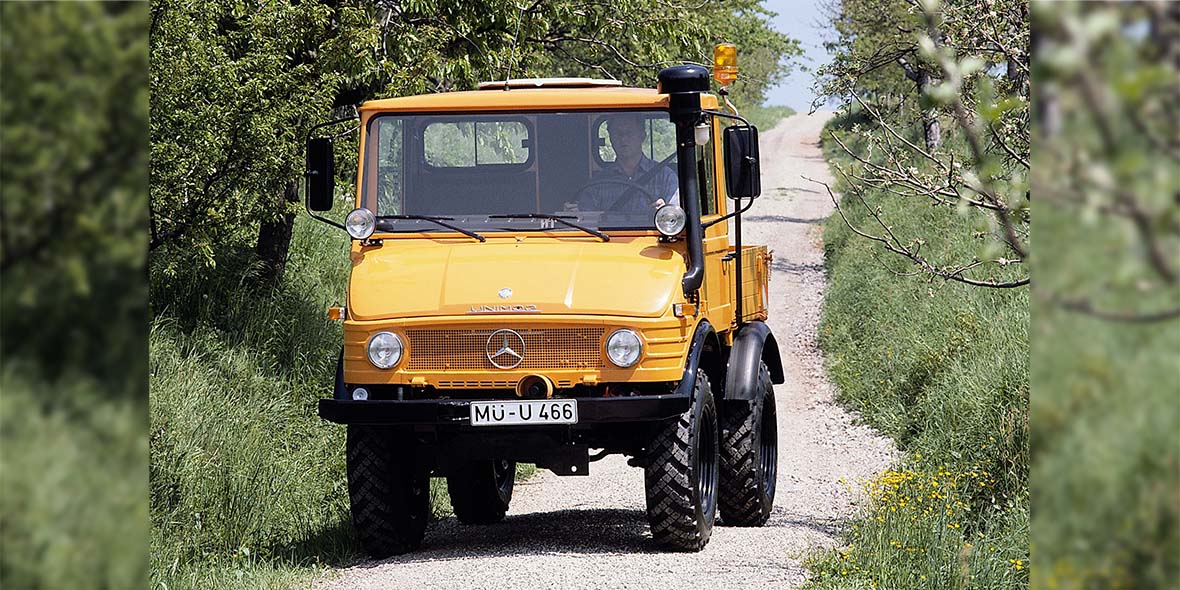
The year 1988 brought a complete overhaul of the Unimog range and no less than three new model series: the mid-range 417 series and the heavy-duty 427 and 437 series.
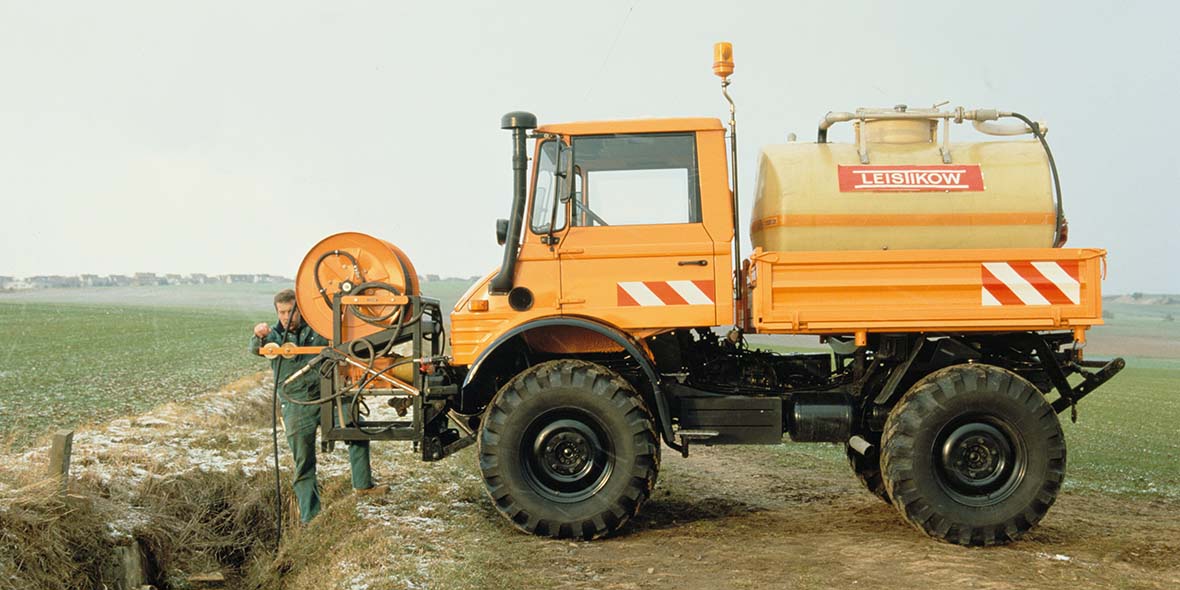
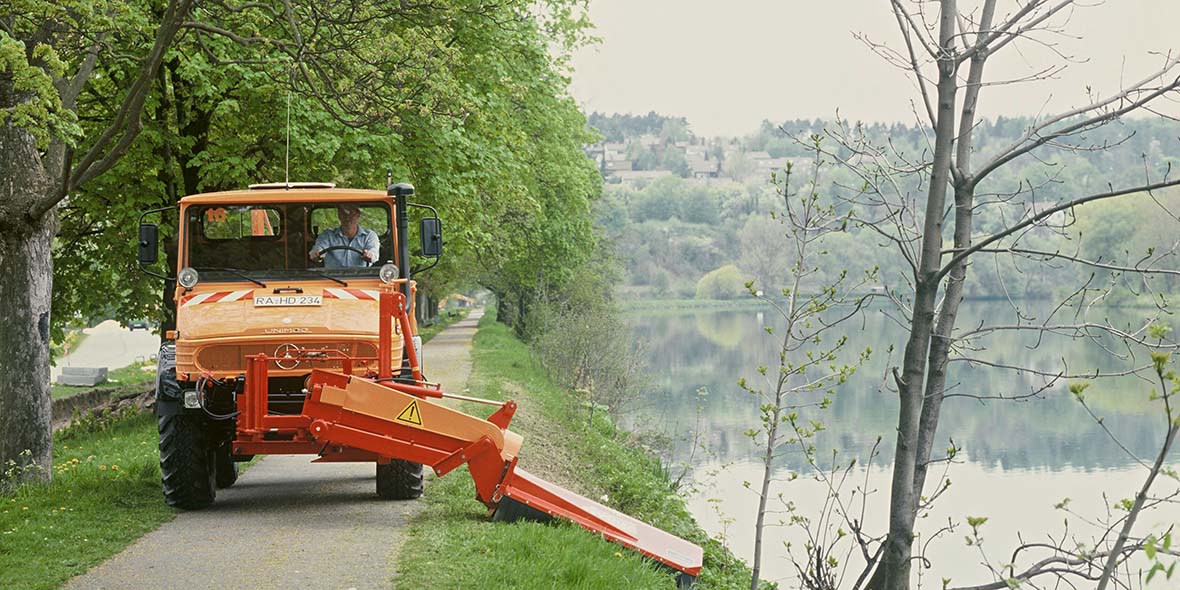
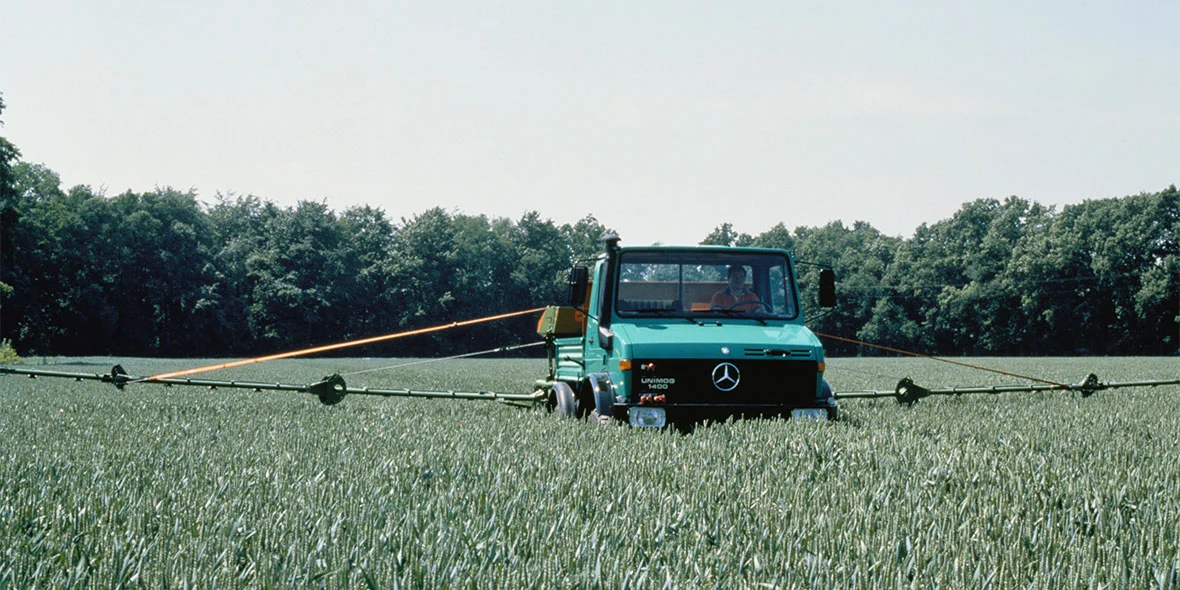
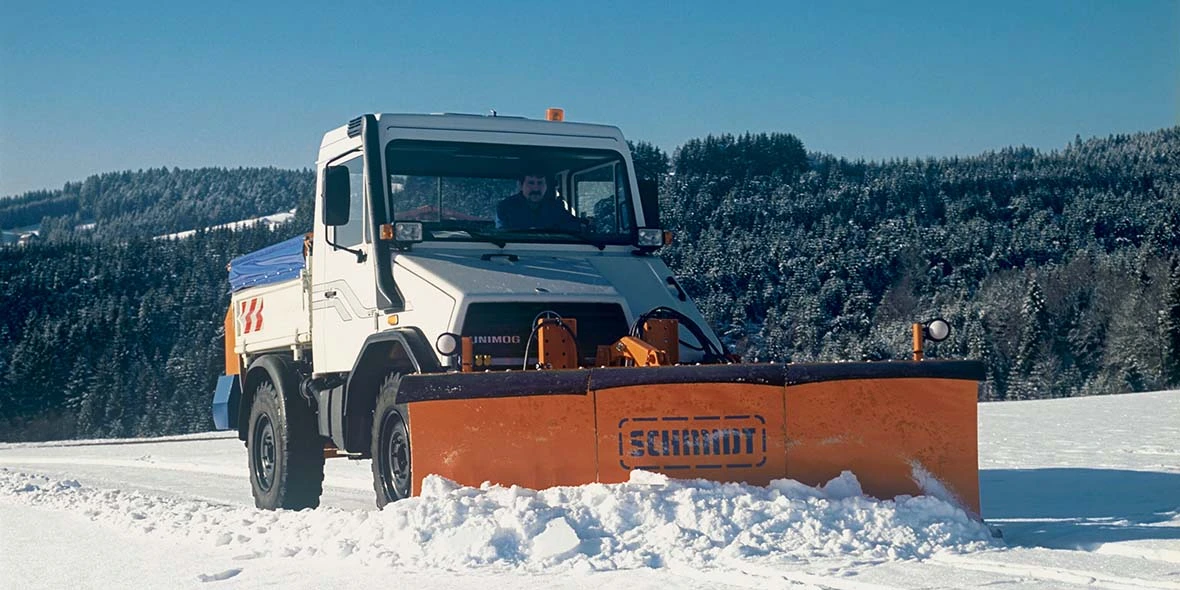
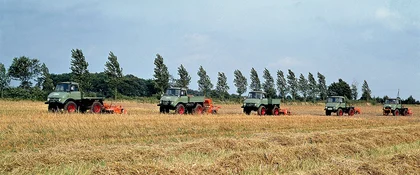
The target group for the mid-range 417 series, in addition to industry and local authorities, was now also the agricultural sector again. Although the 417 and 407 series were not easy to distinguish visually, the fundamental difference lay in the frame concept. While a more economical straight ladder-type frame was used for the light series, a ladder-type frame with offset longitudinal members was used for the mid-range series. This concept, which dated back to the development of the Unimog S more than 30 years before, allowed extreme frame twist while maintaining high bending resistance, and thus providing particularly high off-road capability.
Want to find out more about
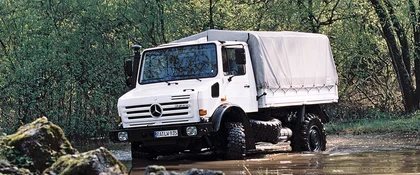
the extreme off-road Unimog?
View product information
Higher output with lower exhaust emissions.
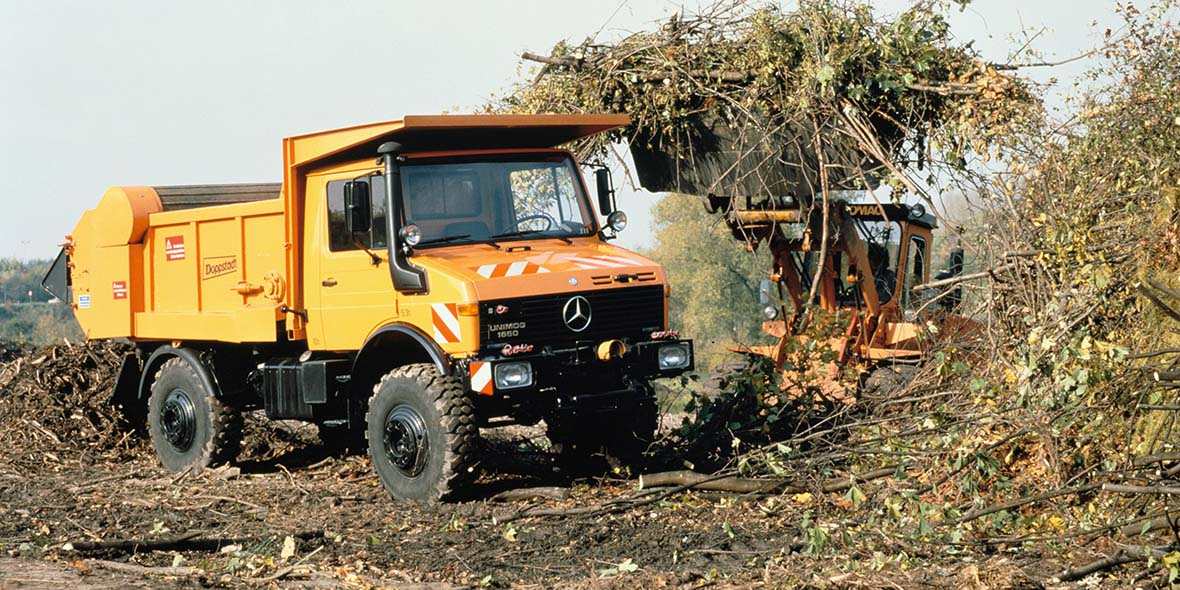
Since with the 407 and 417 model series Daimler-Benz launched a light and a mid-range model series on the market, it was now only logical to present a heavy model series as well. This was the birth hour of the 427 model series, which continued in the tracks of the heavy-duty 424 and 425 model series built since 1976.
The principal feature was a new direct-injection diesel engine, optionally equipped with an exhaust-gas turbocharger for which charge-air cooling became available from 1992. With this new-concept engine, in the Gaggenau plant a particular focus was placed on achieving lower fuel consumption and better emission levels. The reason for this was that local authorities, as the main customers, required vehicles that were up to 5 dB quieter, due to the emission protection laws. The engine rev speed in the maximum output range was accordingly reduced to 2400 rpm, which made it possible to achieve an improvement in the noise level of 3-4 dB.
437 model series with newly-developed transmission.
The heavy 437 series, produced from 1988 onwards, proved to be another top series. For the first time, the newly-developed Unimog UG 3/65 transmission was installed in the vehicles. They were powered by a charge-air cooled OM 366 A or LA engine. The 437 series, with 26 different models, remained on the sales lists until 2002.
New markets in the East.
The fall of the Iron Curtain opened up new markets and opportunities from 1990 onwards. While smaller numbers of Unimog vehicles had already been delivered to the Eastern countries in earlier years, the true magnitude of the actual demand now became apparent: Hungary alone ordered 150 Unimog units for municipal use.
The U 90: a cult vehicle with sight channel.
In May 1992 there was again a premiere to celebrate. The 408 and 418 model series were presented at the IAA Motor Show in Hanover. They featured a newly designed all-steel safety cab with a level cab floor.
The U 90 of the 486 model series stood out from the crowd mainly due to its special cab with sight channel. This was a practical improvement, particularly for work with front-mounted implements, such as those used in the municipal and agricultural sectors.
Combination of a passenger car with truck – only with the Unimog.
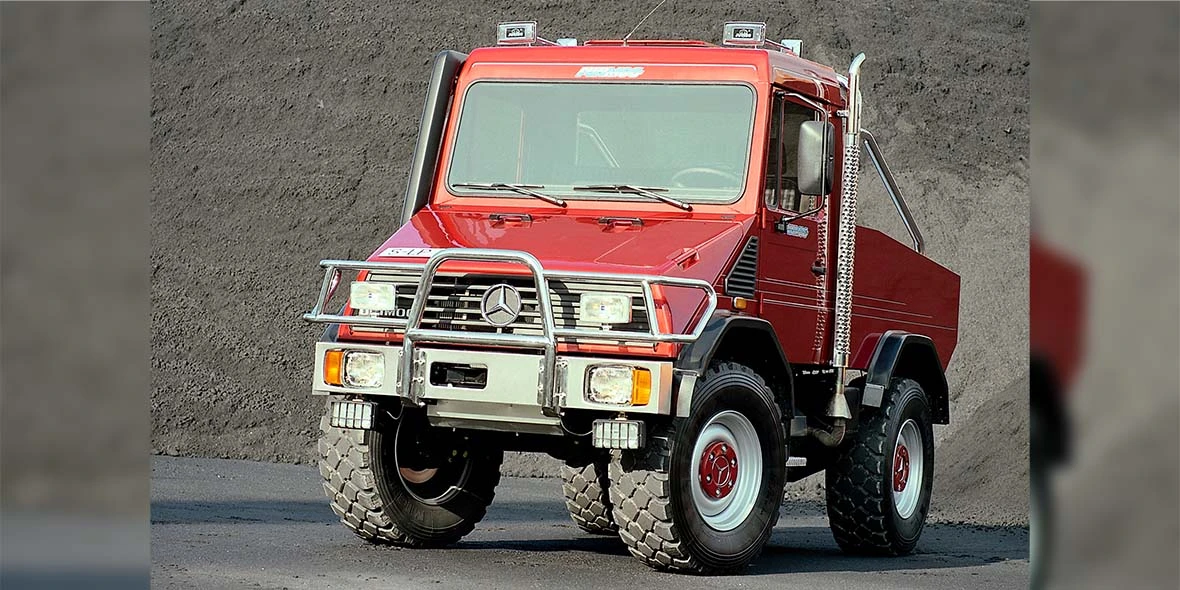
The Japanese trend, consisting of converting Unimog vehicles to "Fun-Mogs", reached Europe in 1993. Daimler-Benz spotted this gap in the market and designed a 110-hp officially-designated Funmog based on the U 90. Its interior and instruments were strongly reminiscent of a passenger car. In addition, the vehicle was given a blood-red metallic paint finish. Unimog connoisseurs could certainly understand this as a respectful reference to the historic oxblood red of the Boehringer era. Particularly eye-catching were the chrome-plated, multi-piece pipe bars and cow-catcher. Equipped with a 130 dB horn, the "recognisability factor" of the Funmog was enormous.
Off-roader of the year and 300,000th Unimog.
1994 was to be a year of anniversaries and honours. "Offroad" magazine voted the Funmog the Off-roader of the Year, and the 300,000th Unimog rolled off the assembly line in Gaggenau.
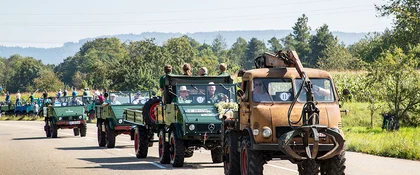
On the occasion of the anniversary celebrations for "One hundred years of automobile manufacturing", three hundred Unimog trucks returned to their birthplace in Gaggenau in June 1995 as part of an impressive display drive. The Unimog is now at home in 160 countries. Its areas of operation are just as varied as its model variants. And this has become a tradition – because: the U in Unimog stands for "Universal".